
Sustaining Your Business Model Through Choppy Waters
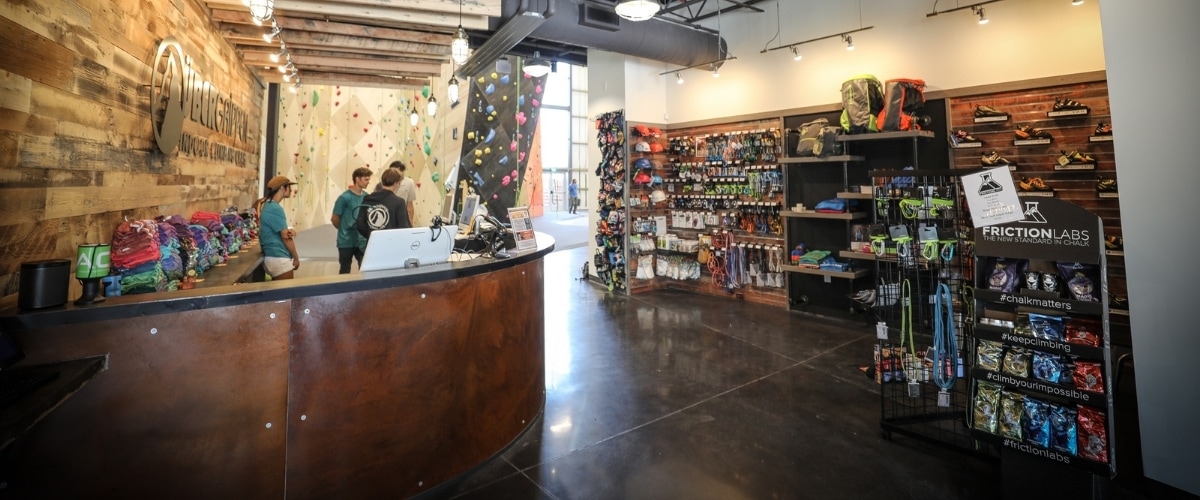
Throughout the last decade, indoor rock climbing has experienced an exponential boom. What was once a niche sport brought indoors to combat bad weather and enhance off-season conditioning, has become a multi-billion-dollar industry worldwide. This shift, while positive for the industry, poses new challenges for a climbing gym owner or decision maker.
Article At A Glance |
|
When the indoor-climbing gym industry first began, business owners were occupied with attracting
first-timers and making climbing accessible to newcomers. The modern challenge has shifted to long-term sustainability and member retention. According to industry veteran, Pete Ward, climbing gyms “face significant upfront capital investment and associated debt, taking years to reach maturity” and ongoing maintenance requires expensive reinvestment in the facility. With ongoing economic uncertainty and rising tariffs, balancing revenue loss, reinvestment, and the need to deliver for an increasingly diverse member base can quickly become overwhelming. Let’s look at the research and discuss some strategies to face these choppy waters.
Economic Pressures
Times of economic uncertainty limit a consumer’s willingness to put money toward discretionary spending, which hurts gym memberships. At the same time, necessary spending does not decrease. Joe Patridge, of Clava (a climbing gym membership software) explains that “inflation, rising wages, and energy costs are squeezing operators, who are caught between a desire to remain accessible and the need to charge enough to stay afloat.” As a result, you are left in a position to re-examine revenue streams and pricing structure to combat membership decline.
Historically, traditional fitness gym memberships have fluctuated with the economy. They tend to decrease when there is a recession, but they also bounce back when the economy gets better. Empower Personal Dashboard™ data reveals that gym membership spending saw a 19% jump from 2024 to 2025, with Americans spending $101.80 a month on average. While this data was collected specifically for traditional gyms, it signals a positive outlook for the fitness industry in 2026.
Diversifying Program Offerings
Member Solutions’ President, Todd Blythe, states that “by offering diverse programs, you increase accessibility for different skill levels and demographics, ensuring steady customer engagement.”
Youth programming is especially lucrative.
Working at a climbing gym, I have found that many parents are hesitant to purchase a membership, but they still sign their kids up for camp or our aftercare program. Gym memberships are a form of discretionary spending that can be substituted by cheaper methods of working out, but childcare is essential. Offering affordable options for childcare with aftercare programs, camps, and youth climbing teams establishes a steady income to fall back on.
Flexible Membership Structures
Similarly, offering flexibility in membership structures is beneficial. No-contract memberships with easy freeze policies are more appealing to new customers who want to try out the sport. The U.S. Fitness & Gym Industry Report (2025‑2030), published by MMGC Invest, observes that “after experiencing the ease of month-to-month app subscriptions and the uncertainty of 2020, consumers became less tolerant of long-term contracts.”
Rise Above Consulting recommends the following membership model ideas:
- Pay-As-You-Go
- Family or Group Memberships
- Tiered Memberships
- Prepaid 3-6-or12 month memberships at a discounted rate
These options allow customers to match their commitment to their budget and usage. Some other good options include:
- Punch cards: This is a good alternative for customers who don’t attend the gym enough to purchase a full membership as well as a step-down option for members who are contemplating cancellation.
- Student or youth discounts: This appeals to a younger demographic with less disposable income (especially useful if located near a university). This also provides an option for parents of avid youth climbers.
- Special promotions: waiving initiation fees or providing special perks like extra guest passes, raffle prizes, or free classes for new members.
Diversifying income streams, remaining flexible, and methods that reward loyalty help you protect your business. Sustaining your business model through economic pressures sometimes means molding it to be open to more opportunity.
Tariff Pressures
Trade policy has introduced yet another challenge to the climbing industry. The Climbing Journal writes that “the United States has a 25% ad valorem tariff on all steel and aluminum imports, meaning physical products containing imported steel or aluminum will face a charge equal to 25% the total worth of the steel used.” This can affect building projects if materials used are shipped overseas. To mitigate these increased costs, it is advisable to compare all of your supplier options and stay on top of tariff changes that may affect your facility.
Evolving Demographics and Consumer Expectations
With increased popularity comes a new client base with new expectations; these expectations are often more high demand. Especially when facing economic lows, customers expect to get the most for their buck when it comes to their memberships. Fitness classes, yoga studios, free perks, easy online booking, inclusive programs, a sense of community… The list goes on and on. At the end of the day, people want to get their money’s worth. However, meeting these demands requires ongoing reinvestment.
A way to mitigate a member’s desire for moreness is by providing transparent pricing from the start. Let people know what the perks of being a member include: a certain amount of guest passes, discounts on classes, access to training, community opportunities. As Clava’s industry analysis shows, the traditional climbing-gym pricing model of low drop‑in rates and high memberships requires four or five visits per month to justify the cost; the only sustainable solution is to shift to pricing where the value is clear.
If you can’t justify the price, it is time to provide more for your members. This doesn’t have to come at a high price; there are plenty of low-cost perks that feel generous. Providing guest passes allows members to share their sport or hobby with family and friends. Hosting community events gives members a sense of value and camaraderie in the space. Providing discounted rates for classes or special offerings provides a tangible monetary value.
When members can see exactly what they’re paying for and experience that value, a membership feels less like a luxury and more like a worthwhile investment.
About the Author
 Aitana Martinez is the Programs Manager at Triangle Rock Club’s Raleigh location in North Carolina. She holds a Bachelor’s Degree in English from Florida International University, where she graduated in 2024 with plans to pursue a career in writing. Aitana discovered climbing in the spring of 2022 and quickly fell in love with the sport. A proud “boulder bro” who occasionally ventures onto top rope and lead, she spends much of her personal and professional life inside the climbing gym, whether she’s managing or expanding programs. She now wants to bridge her love for climbing and writing.