
What Professionals Learn in Work at Height Level 1
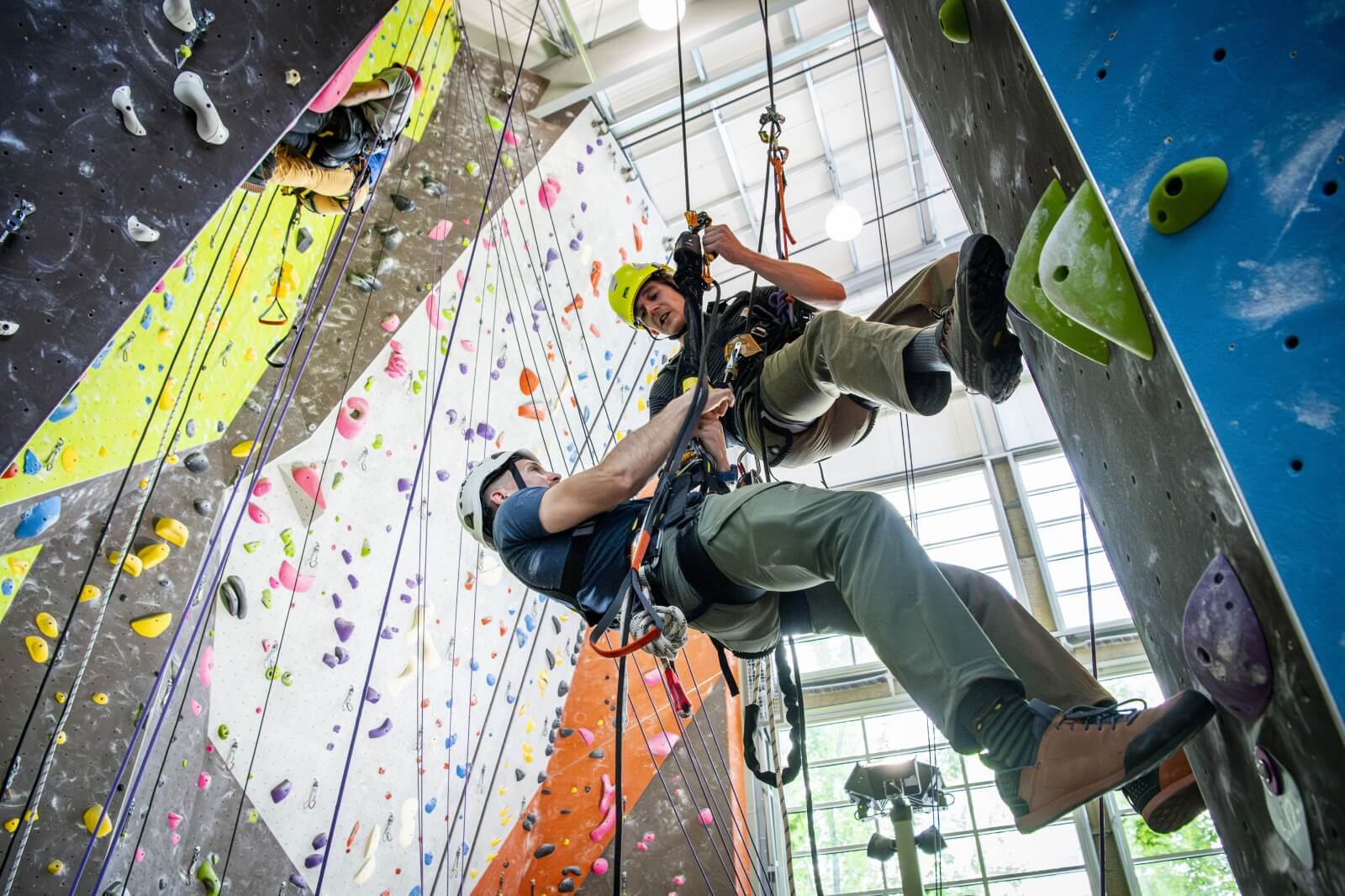
Routesetting, auto belay maintenance, cleaning, decorating, inspections. All of it happens off the ground, and all of it is covered by a web of industry, local, and national regulations. The CWA’s mission is to help climbing walls operate responsibly and Work at Height (WAH) compliance has been an evolving discussion in the industry.
We're excited to share that the CWA is developing a new Work at Height Student Guidebook, planned for release next year. This guidebook consolidates the full WAH curriculum into a single resource that supports students from their first day of Level 1 training through the more advanced responsibilities of Levels 2 and 3. It's the product of years of feedback from certificants, Providers, Provider Trainers, and the WAH Committee. Our recent certification courses have seen a soft launch of the new guidebook, and now here’s a rundown on what it covers for you.
Article At A Glance |
|
What WAH Level 1 Students Learn
The Level 1 certification is built for any professional working on ladders and in suspension using rope systems in a climbing gym. A Level 1 Technician can be assigned common work at height tasks, performs them within their facility's WAH plan, and knows when to defer to a Level 2 or 3 for anything outside their scope. WAH candidates also learn about rescue response, inspection, and their role in managing risk to the climbing wall business and themselves.
Risk management fundamentals
Level 1 students learn to identify common hazards in elevated work zones and apply basic hazard controls. They're introduced to the documentation that governs safe work, including job hazard analyses and fall protection plans, so they understand not just what the rules are, but why they exist.
PPE selection and use
The guidebook covers the full toolkit of work at height equipment: harnesses, helmets, descent control devices, fall arrest devices, energy absorbers, static ropes, and positioning lanyards. Students learn to use equipment in accordance with manufacturers' instructions and to inspect it properly.
Access methods and movement
Every facility presents different access challenges, and the guidebook walks through the advantages and tradeoffs of ladders, attended belays, auto belays, rope ascent, and powered platforms. The guiding principle is simple: use the access method that provides the least exposure to hazards. Once at height, students learn to navigate workspaces using suspension systems, fall arrest systems, positioning tools, and ladders.
Building rope access systems
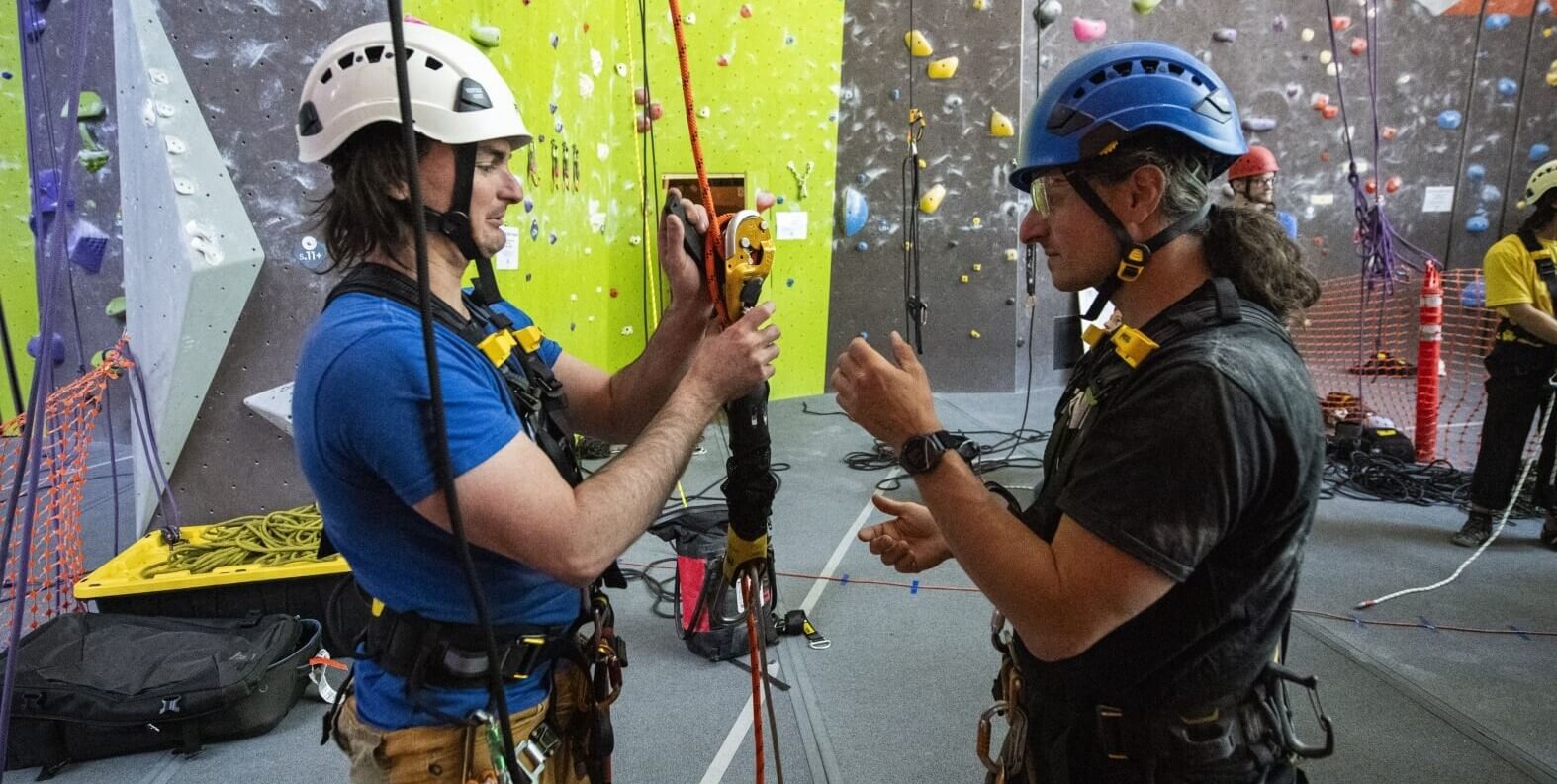
Level 1 Technicians learn to build suspension, fall arrest, and haul systems using equipment from different manufacturers, including drop-proof haul systems for material handling. If you've ever watched a volume get hauled forty feet up a wall, you know why this matters.
Rescue readiness
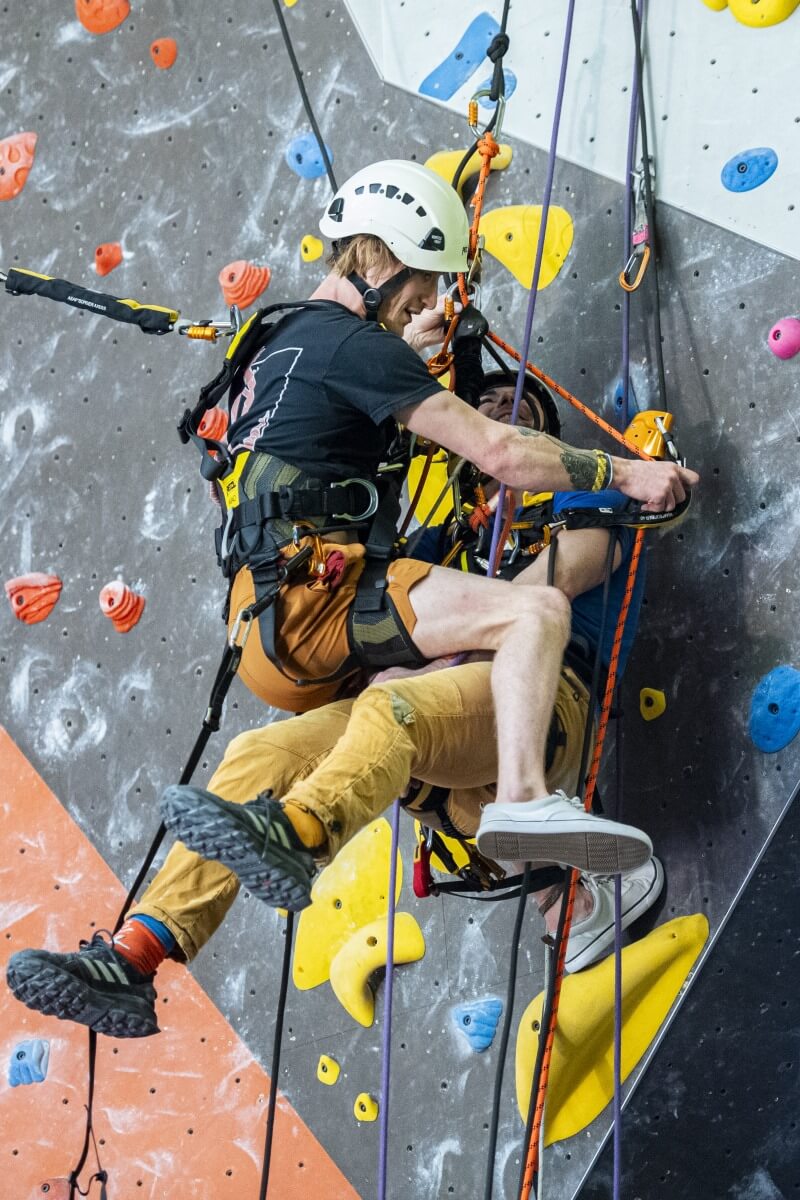
Level 1 students train for one specific rescue scenario: lowering an incapacitated coworker by operating the injured worker’s descent control device. It sounds simple, and it is, but that's the point. People forget what to do under pressure, and having a practiced protocol is what turns a scary moment into a routine one. The CWA encourages all climbing walls to develop rescue plans and hold regular training events to keep skills fresh.
Professionalism
The guidebook also addresses how to be a reliable climbing wall professional, workplace conduct, and what it means to treat work at height as a profession rather than an extension of recreational climbing. Work is not sport, and the guidebook is direct about the difference.
Certify Your Staff In House
Here's the part gym operators should pay attention to. The WAH program is designed so that a WAH Provider on your staff can deliver Level 1 courses in house. That means no travel costs, no waiting for an open course in your region, and no scrambling to schedule training around your setting calendar.
For a gym with regular routesetter turnover or a growing setting team, an in-house provider changes the math entirely. You control the timing, you train in your own facility on your own walls, and your new setters learn the hazards and controls specific to the place they'll actually be working. The certification still meets the same CWA standard, assessed against the same criteria, but the process becomes something you manage rather than something you wait on.
If your head setter or director of routesetting is ready for the Provider pathway, now is the time to start planning. By the time the new guidebook is in hand next year, you could have your own provider ready to provide industry leading training.
For more information about certifications, contact certifications@cwapro.org.
For questions about membership or other CWA programs and services, contact hello@cwapro.org.