
Better Bouldering Instruction from a Certified Staff – CWI Level 1
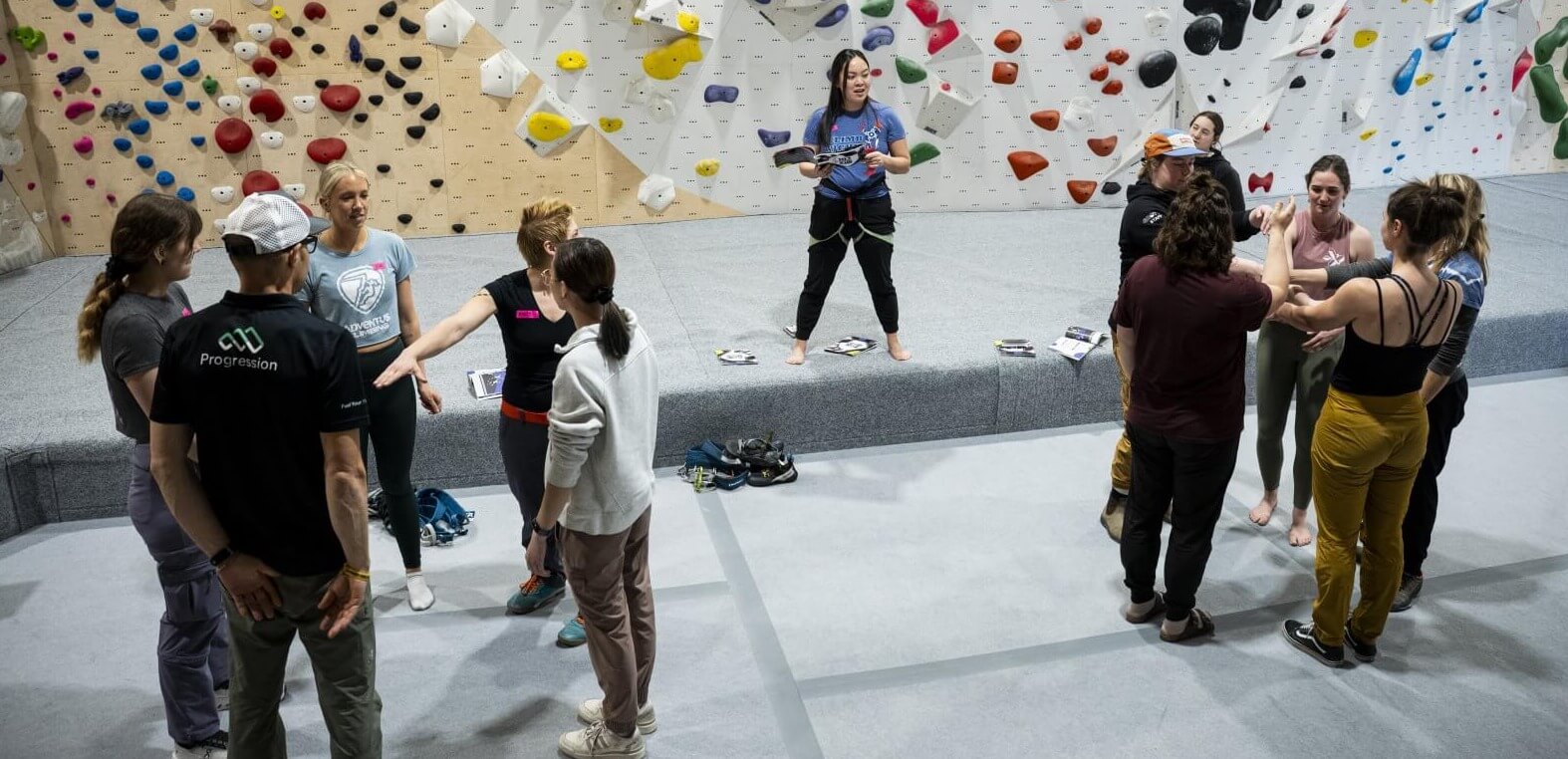
Bouldering is often the first activity a new climber tries when they come through the door. There is no harness, no belay check, and no partner system to rely on. For many gym operators, that simplicity can make the bouldering area feel like the lowest-risk part of the facility. In practice, it deserves as much attention as any other area — and the staff working it need to be prepared accordingly. Your facility can benefit from having certified Climbing Wall Instructors (CWIs) ready to welcome your climbers and set them up for success and the right attitude towards the sport of climbing. Continue reading to get a glimpse of the topics we cover in a CWI Level 1 course.
Article At A Glance |
|
Every Fall Is a Ground Fall
This is the foundational message of any bouldering orientation, and the CWA CWI Certification Program treats it as such. The flooring is the climber's primary protection, and a bouldering instructor's job is to make sure every new climber understands the limits of flooring before they start climbing.
The CWI program outlines five elements that should be part of every bouldering orientation:
1. Inherent risks of bouldering. Holds spin, feet slip, and unplanned falls happen. New climbers need to understand these risks clearly and confirm they are willing to accept them. A good instructor does not assume that willingness — they establish it.
2. Limits of the flooring. Padding reduces risk but does not eliminate it. Instructors are taught how to communicate what the flooring is designed to do and what it cannot be expected to do.
3. Facility rules. Height limits, route marking, where to stand when not climbing, and etiquette around other climbers all need to be covered before a new climber is left to their own devices. Posting rules on a sign is not the same as making sure someone hears them firsthand.
4. Exiting a boulder problem. Down climbing, controlled drops, and topping out are skills that take practice. All falling injuries happen during the exit, which makes this one of the more important parts of an orientation to get right.
5. Falling technique. Feet hip-width apart, knees bent, arms close to the body, head tucked — and for harder falls, dropping and even rolling back to absorb momentum. These are teachable skills, and climbers can be encouraged to practice and understand the dynamics involved in falling.
Orientation Is the Start, Not the Finish
A completed orientation does not mean a new climber is prepared to manage every situation they will encounter on the wall. It takes time to internalize risk, develop reliable falling technique, and build the situational awareness that keeps a climber safe in a busy gym.
Collision risk is worth highlighting specifically. In an active bouldering gym, climbers are falling from height into a shared landing area, and the fall zones of adjacent problems can overlap. Climbers who understand fall zones, can read how a climber is progressing, and know when to step in or stay out of the way. That kind of judgment comes from training, not just time on the wall.
What Certification Does for a Facility
The business case for certifying bouldering staff comes down to a few practical realities.
Certified staff are better at identifying risks before they become incidents. The CWI program covers risk management frameworks and emergency procedures, not just climbing technique. An instructor who understands these concepts is more likely to notice something developing, respond appropriately, and document it correctly afterward.
There is also a consistency benefit. When staff have trained to the same standard, orientations cover the same content, floor monitoring follows the same approach, and incident responses draw on the same framework. That consistency matters for day-to-day operations, and it matters when an insurance carrier or legal question arises.
Certified staff also tend to grow into broader roles. A bouldering instructor who has gone through the CWI program has the foundation to work with youth programs, assist with coaching, take on supervisory responsibilities, and help train new hires. The initial investment in certification can pay out in multiple directions over time.
High turnover is a real challenge in this industry, and it is reasonable to think carefully about where to invest in professional development. The counterargument is that staff who receive meaningful training and feel supported in their professional growth are more likely to stay, and more capable while they do.
Most importantly, trained competent staff are noticed by your customers. Having the right first impression of your staff can make the difference between a new member and a one time visitor and can set the tone for what kind of behavior and attitude is expected in your community.
The Scope of the Job
The CWI program describes a bouldering instructor as someone who can identify risks associated with equipment and technique, communicate clearly with a range of learners, adapt to different learning styles, monitor the floor with sound judgment, and respond appropriately when things go wrong. That is a substantive set of skills, and it is reasonable to expect that developing them requires more than climbing experience.
The bouldering area is where a large portion of new climbers form their first impression of your facility. The staff working that area shape that experience directly. Investing in their training is an investment in the quality and risk management that your gym delivers every day.